
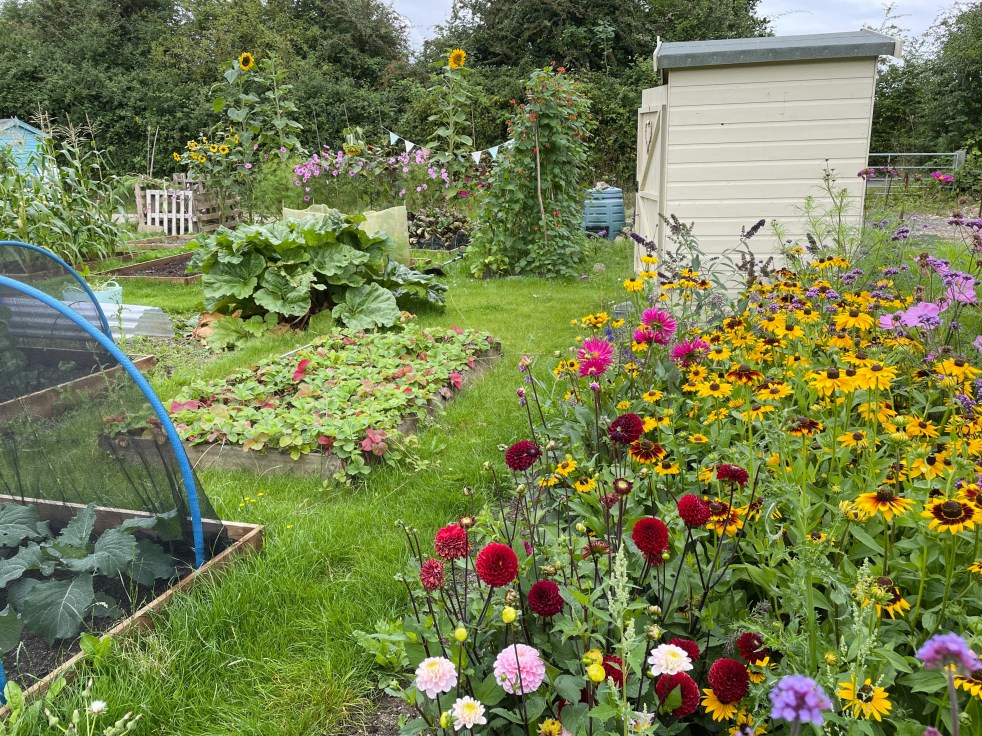
Growing flowers on your allotment will add colour and provide lovely blooms for cutting, they may even help to boost the health and productivity of your plot by attracting beneficial insects and pollinators. There are so many lovely flowers that can be grown on the allotment such as dahlias and sweet pea. The flowers listed below are perfect for beginners, super easy to grow from seed and fuss-free!
1. Cosmos
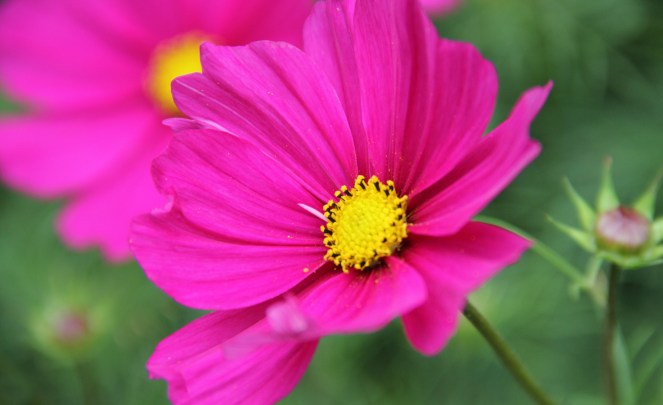
Summer colour which lasts well into late autumn, good for cutting and attracting pollinators. Cosmos can grow quite tall and get a bit wild and airy, but that’s what I love about them! Beautiful feathery foliage and flowers in many colours from soft white to bold crimson.
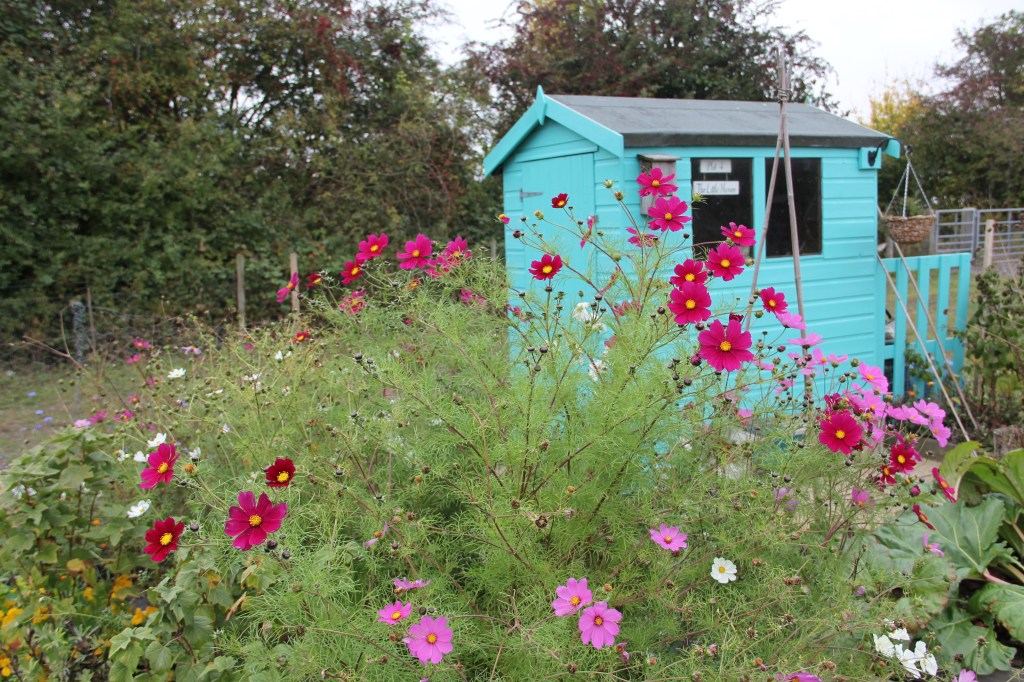
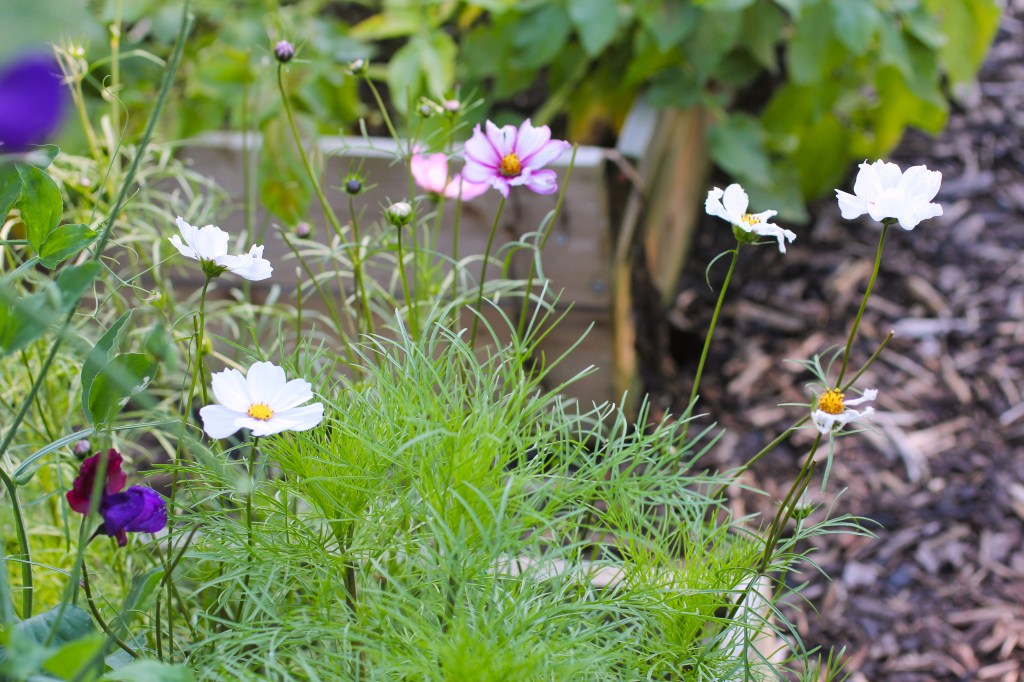
I start seed off around mid to late March in cell trays and pot them on once large enough to handle, pinching the growing tips out to encourage a bushy plant and more blooms. Where space is limited try growing a dwarf variety. For something a little different try Apricot Lemonade, beautiful shades of pale orange flushed with soft pink. Cosmos will keep on flowering with a bit of dead-heading (I don’t always do this and it still keeps going!) until a hard frost arrives. The one flower I couldn’t be without on my allotment!
2. Sunflower

Ahhh who doesn’t love a sunflower? Great first flowers for children to grow and a firm favourite with adults too! There are so many colour options available and dwarf varieties too, not just the yellow giants we know and love.
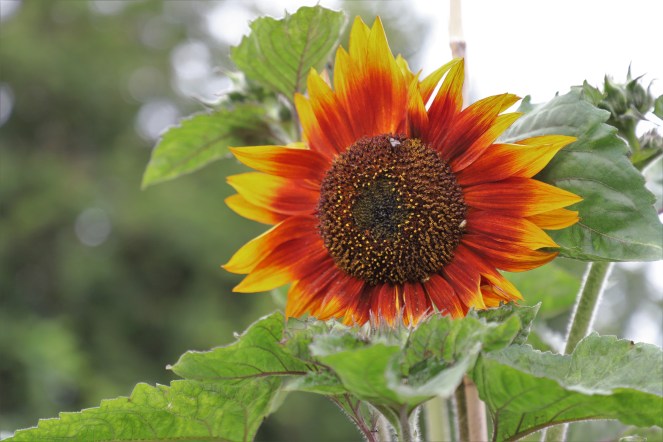
Perfect for attracting bees and hoverflies and in autumn/winter the large seed heads become a feast for wild birds.

I start mine off in small pots of compost on a sunny window or in a greenhouse, plant out when risk of frost has passed. For exposed or particularly windy plots tie young plants in loosely to a cane to prevent snapping. If you’re looking for a shorter variety to try, Teddy Bear is a lovely one. Golden fuzzy centres will be a big hit with children and the name is adorable!
3. Nasturtium
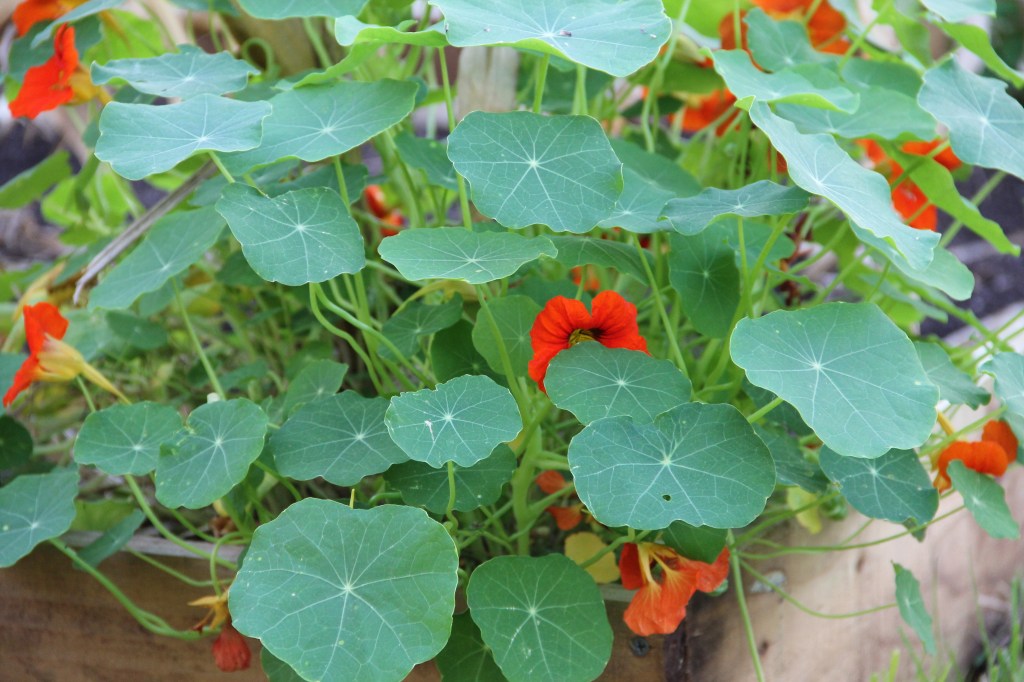
Nasturtiums are the perfect allotment flower. Super easy to grow, the sprawling habit will cover ground quickly and suppress weeds. Flowers and leaves are edible with a spicy peppery flavour, great for adding colour to a salad. Seed pods are edible too (best when green) and can be pickled and used as a substitute for capers.
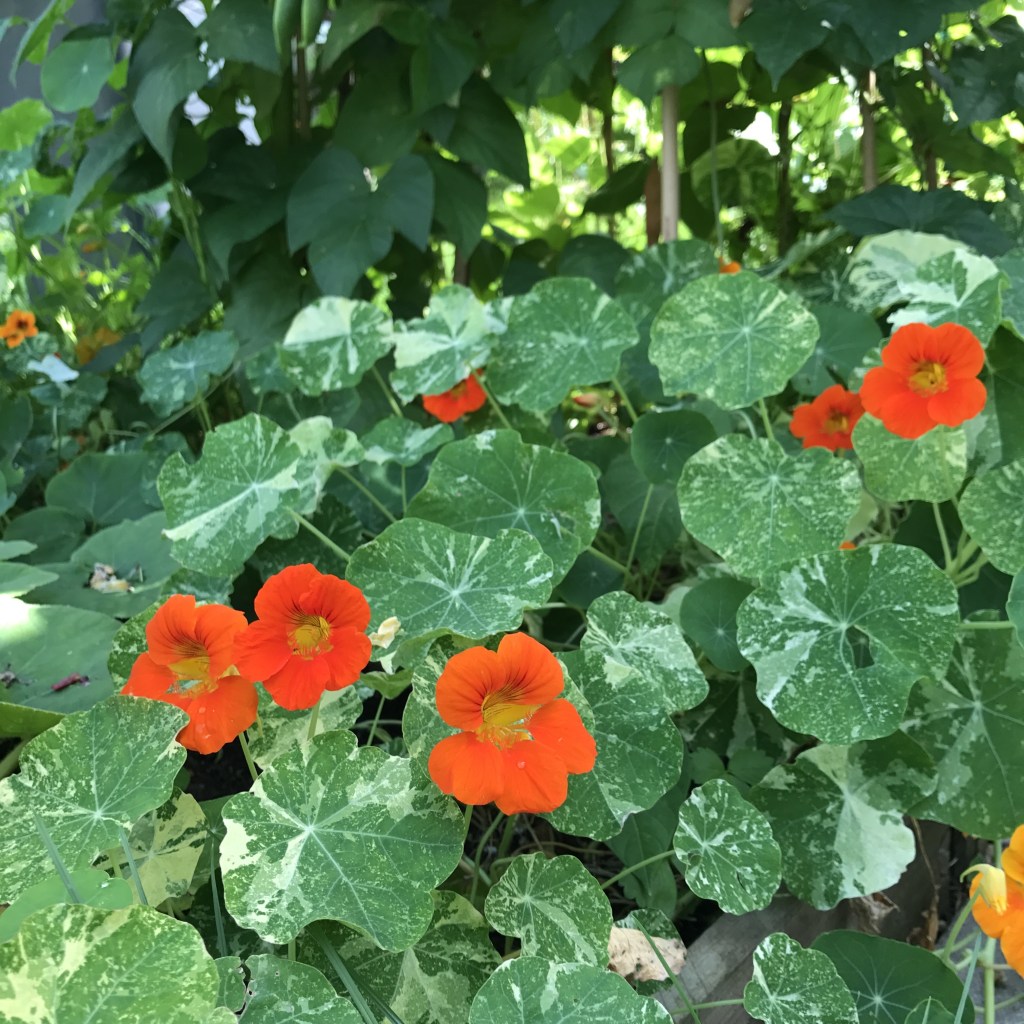
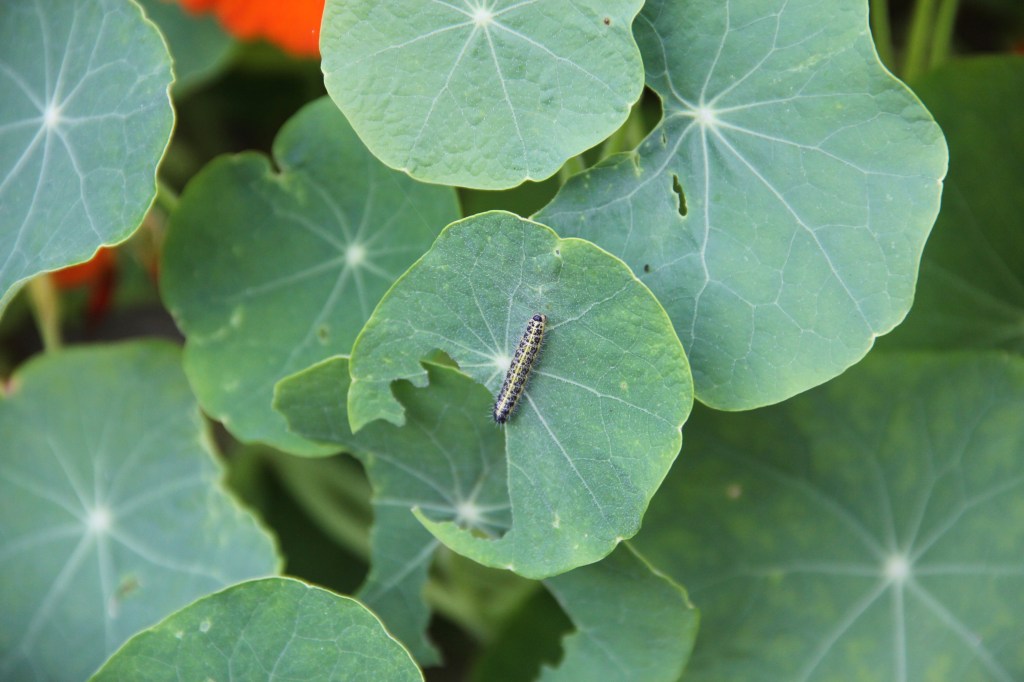
Nasturtiums are attractive to pollinators but did you know they can also be useful for distracting butterflies and blackfly away from crops? You might want to check for ‘extras’ before adding flowers or leaves to your salad!
Sow direct in spring, a later sowing will extend the flowering time well into autumn and they’ll keep going till the frosts come. Best in poor soil where they will thrive and flower profusely, feeding will result in more leafy growth. Will self seed easily. Try trailing types in containers or hanging baskets.
4. Rudbeckia (Gloriosa Daisies)
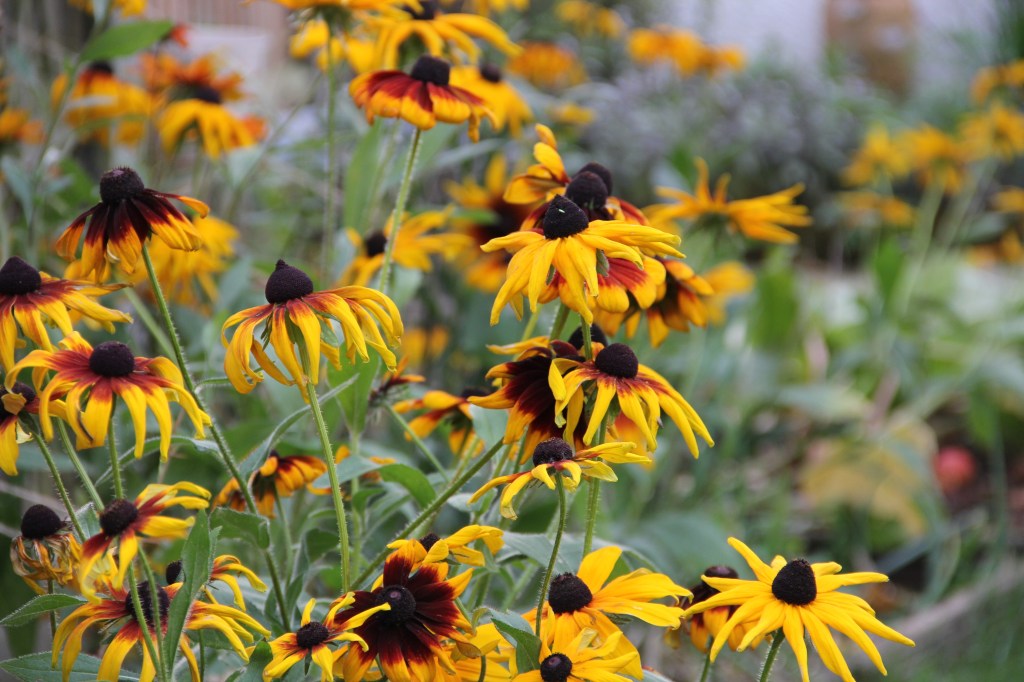
I grow this type of Rudbeckia as a half hardy annual, spectacular colour from summer right through to late autumn. Bold flowers with different pattern markings glow in the autumn sunshine, they brighten up the allotment on a dreary day when little else is in bloom.
Sow into seed trays in spring and place near a sunny window or in the greenhouse. Don’t worry about thinning them out, I gently pull clumps of seedlings apart and plant out the clumps after the risk of frosts has passed.
5. Calendula (Pot Marigold)
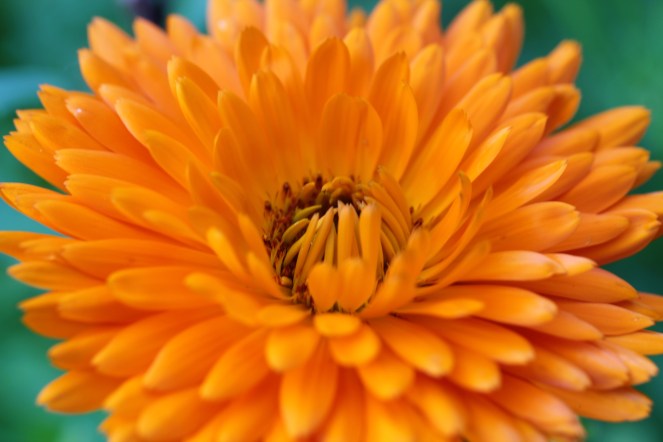
You will need sunglasses with this popular edible flower! Calendula is available in shades of bold orange and yellow with single and double flowers, for something a little different try soft orange Pink Surprise or creamy lemon Snow Princess. Personally I don’t think you can beat the common orange for flower power!
Calendula flowers can be used to make many things such as soap, infused body oils and creams or simply sprinkled over a summer salad.
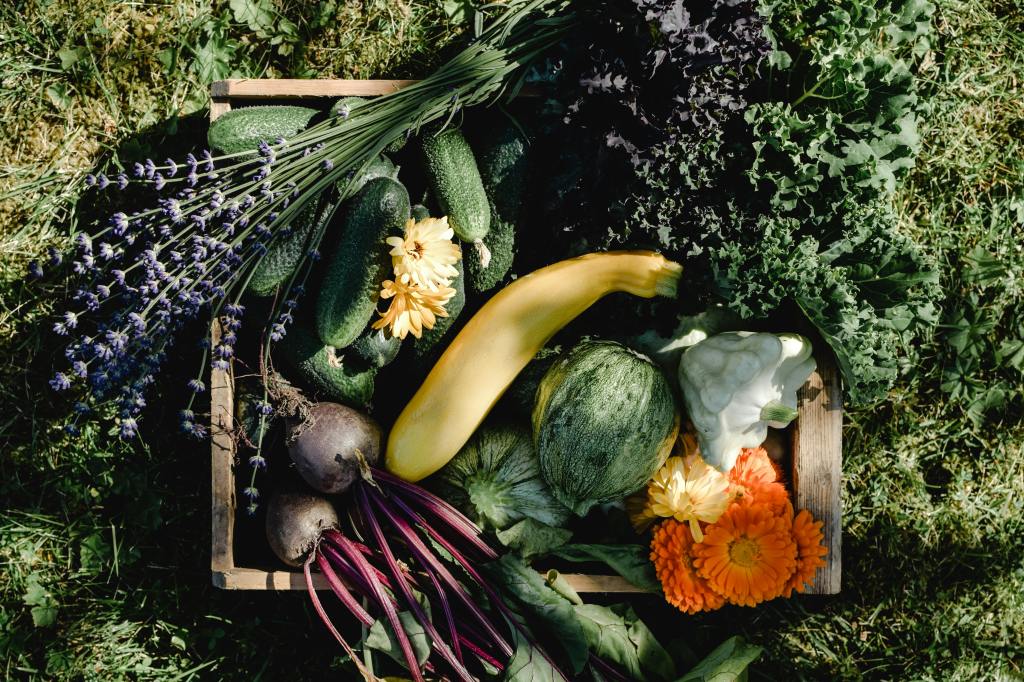
Very easy to grow and will self seed easily, can be sown direct which is my preferred way of growing them. Calendula are prone to powdery mildew (a fungal disease which causes a white dusty coating on stems and leaves) but don’t let that put you off growing them. To prevent this try thinning out seedlings to allow better airflow. Tolerant of a light frost and will try to flower during a mild winter! I sow Calendula around my runner beans to attract pollinators and to keep blackfly at bay. It seems to work well.

The flowers listed above are relatively cheap to buy and will produce seed so you can collect your own for future years. I adore growing flowers on my allotment, they make me, the bees and my veg very happy! Many other plot holders are starting to recognise the benefits of including flowers too.


 Allotment Haven
Great selection! I grow quite a few of these! I also love cornflowers, another cheap one which grows well.
LikeLiked by 1 person
Cornflowers are great too, also Cali Poppies!
LikeLiked by 2 people
A most enjoyable post and lovely pictures. The only one of these five I don’t grow on my plot is rudbeckia, and calendula/pot marigolds are my favourite flowers. I sow most of my flower seeds direct, and collect/save seeds in the autumn for the following year.
All allotment plots should have at least a few flowers. xx
LikeLike
Thank you Flighty and I agree with you! xx
LikeLiked by 1 person
Ooh cali poppies are so pretty. 2nd year on my allotment plot so going all out with the flowers.
LikeLike
Have fun growing flowers this year, your plot will be buzzing with bees 🙂
LikeLiked by 1 person