
Ever since planting asparagus seedlings I have patiently waited before picking the first spears. I decided to grow asparagus from seed rather than plant crowns, knowing this would add several more years to the picking experience. Occasionally I regret that decision, I’m not a very patient gardener and the wait is painfully slow. I’m years away from picking my first spear, so imagine my horror to discover asparagus beetles tucking into the asparagus before I have.
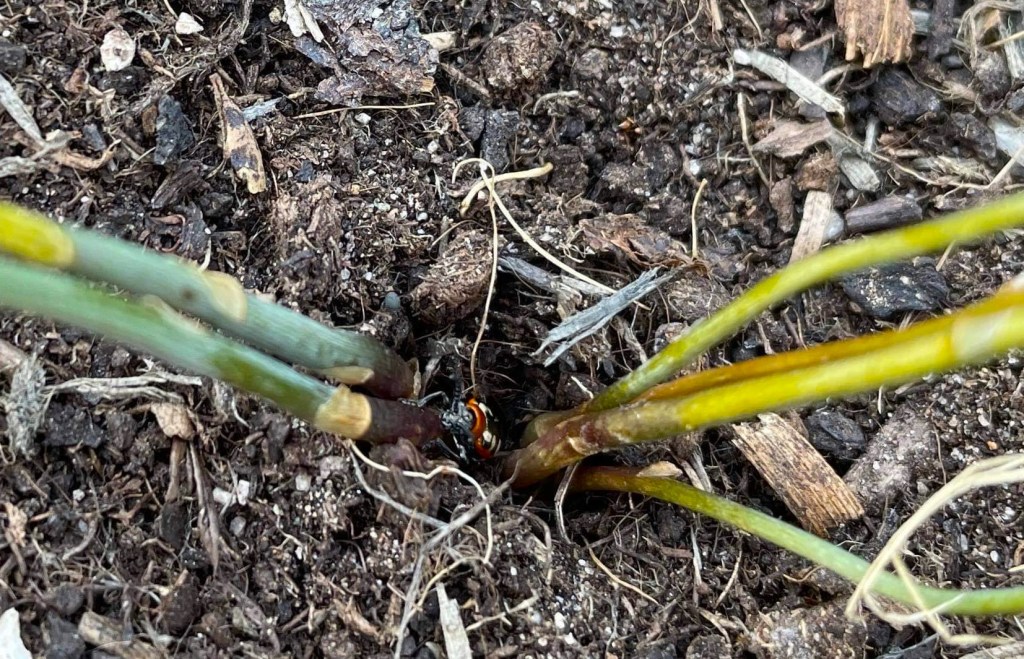
Asparagus beetles are annoyingly pretty, orange in colour with a cream and black pattern across the back (similar to a chess board), but don’t let their good looks fool you, they are very damaging to asparagus crops. The ‘super model’ adults are fairly easy to spot but they can fly which makes removal tricky.

The larvae, however, are ugly little things. Khaki green in colour they camouflage against the foliage making them tricky to spot when newly hatched, becoming more obvious as their bodies swell and triple in size. Adult beetles and larvae are equally damaging and should be removed as soon as you see them, withering spears or foliage stems a sign you have a problem.

I try to remove the eggs before they hatch to avoid having to deal with the larvae, they are usually found cemented to the feathery foliage in a line, black in colour.

To keep on top of the problem I encourage natural predators such as birds, wasps and frogs to my allotment. I do remove beetles and larvae as I see them because they really are very damaging to young asparagus plants, causing them to wilt and dry up if left unchecked. Cutting down foliage to the base from late autumn onwards may prevent beetles from overwintering inside hollow stems, but they are quite sneaky and can ‘burrow’ down in the soil around the crowns.
Biological pest control such as nematodes are pricey and can be tricky to get the conditions just right but could be a good solution.

 Allotment Haven