
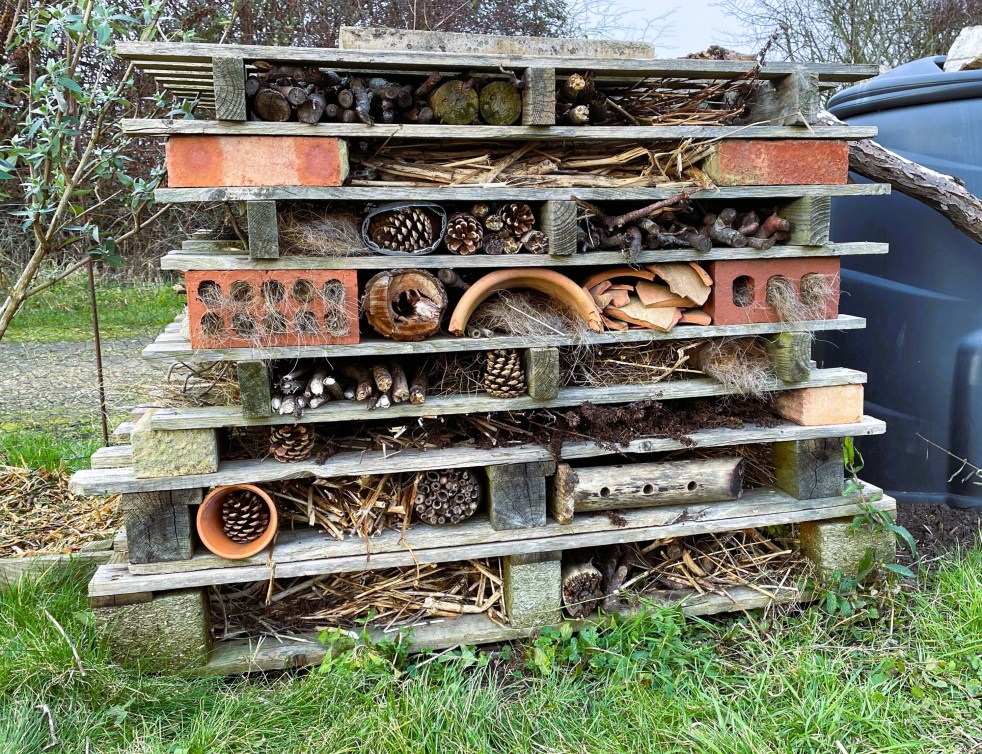
I built a bug hotel on my allotment, it was super easy and very satisfying to do and a great way to help precious wildlife by providing refuge and habitat. Encouraging predatory insects and pollinators to your allotment can help maintain a balanced ecosystem, resulting in healthier crops and higher yields without the need for any nasty chemicals.
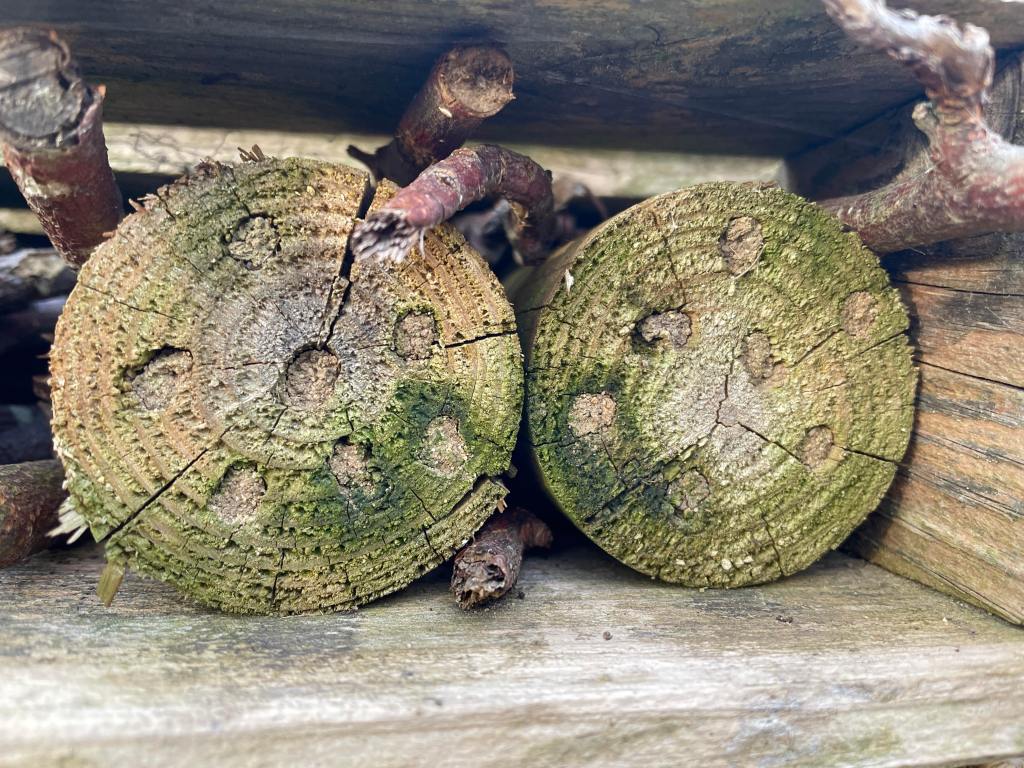
To create the structure for my bug hotel I used heat-treated wooden pallets stacked on top of each other, they work well as they come with ready-made gaps and are fairly easy to get for free. Block pallets are best if you can get them, they have square blocks in each corner which are woodchip or pallet wood and these types are perfect for stacking. The entry holes are a good size for placing larger material such as air bricks and logs etc. I used pallets found at the allotments, a mixture of larger block pallets and smaller pallets.
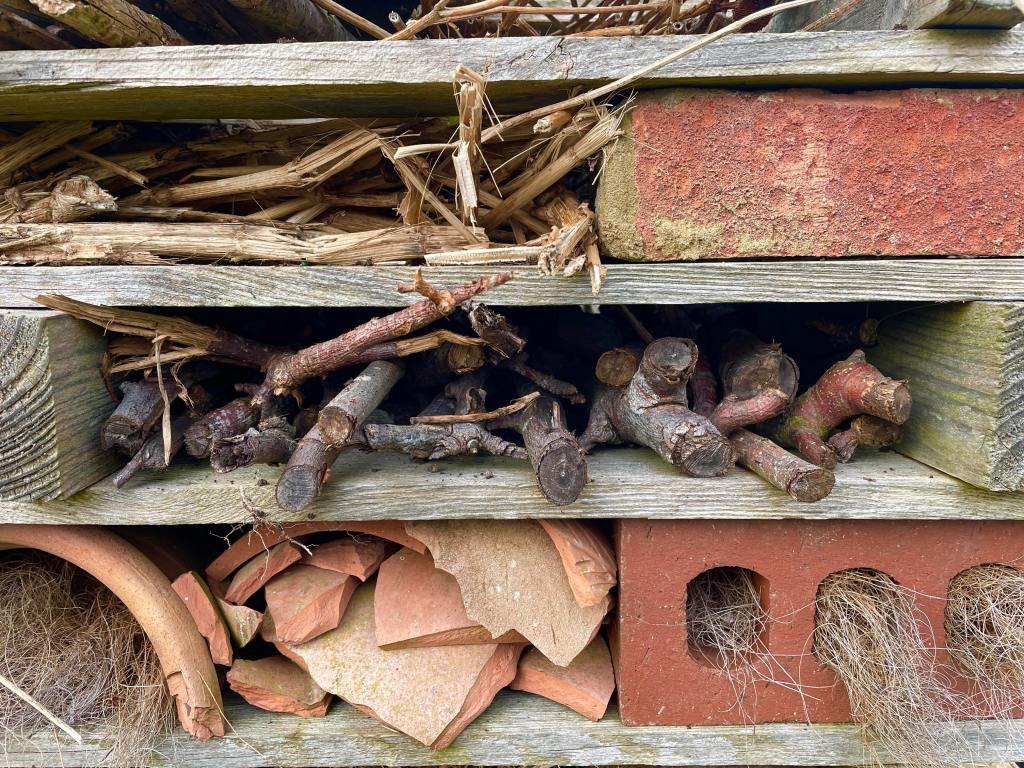
You can build a bug hotel at any time of year and part of the fun is collecting the natural materials to fill it – a great project to do with children. Things to use in your bug hotel could be: leaves, pine cones, twigs, hollow stems and dry plant material such as grass etc. You could also include broken pots, roof tiles, air/engineering bricks, drilled blocks of wood or logs, rolled cardboard and hollow bamboo canes.
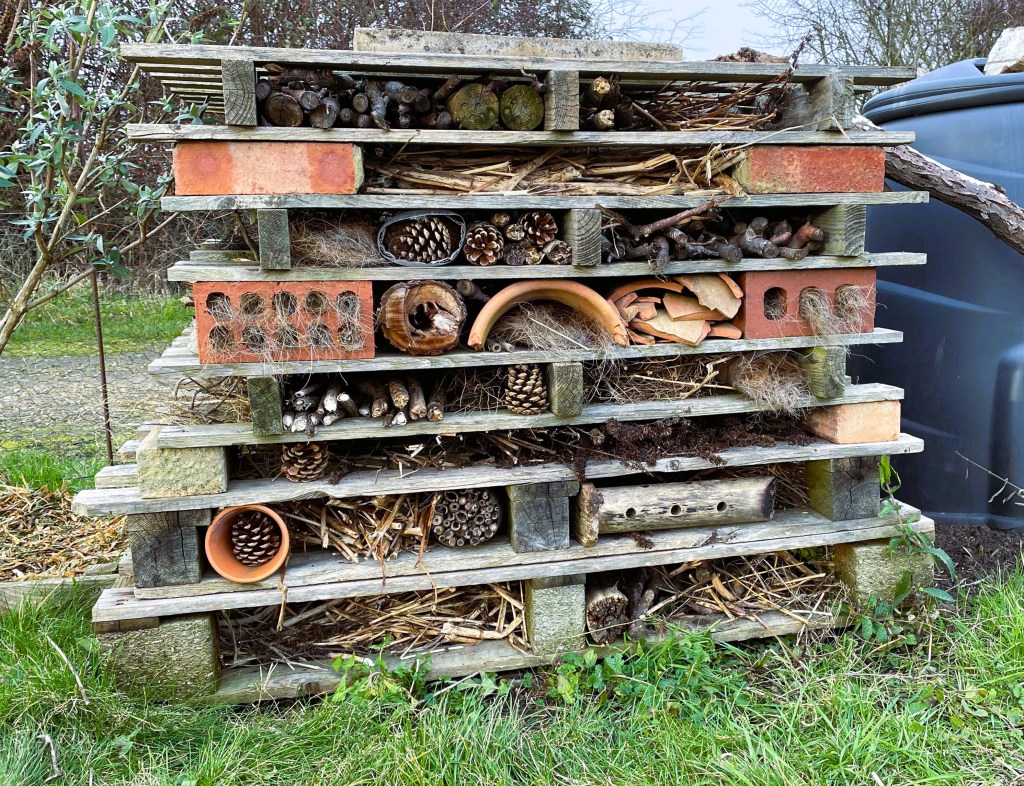
Decide where to place your bug hotel, a quiet corner out of strong winds and in a sunny spot ideal for attracting most insects including solitary bees. Make sure the ground is level and firm before stacking your pallets (use heat-treated, check the stamped sides to be sure) and set the first pallet on bricks in each corner to lift it clear off the ground, this will prevent the pallet wood from rotting too quickly and the naturally shady area will attract beetles and perhaps a frog or hedgehog!
Now the fun part, create various nooks and crannies in the pallet gaps using the materials you have collected. There’s no right or wrong way to do this but here are some tips for attracting different creepy crawlies:
- Beetles, centipedes, spiders and woodlice: Logs and rotting wood
- Solitary bees: Hollow stems, bamboo canes and drilled wood
- Ladybirds, beetles, spiders etc: Dry leaves, pine cones, bunches of twigs, straw and broken pots
- Lacewings: Rolled cardboard
- Frogs, toads and newts: Broken pots, tiles or stone placed low down in shade. A small wildlife pond, if allowed, would increase success of attracting amphibians to your allotment.
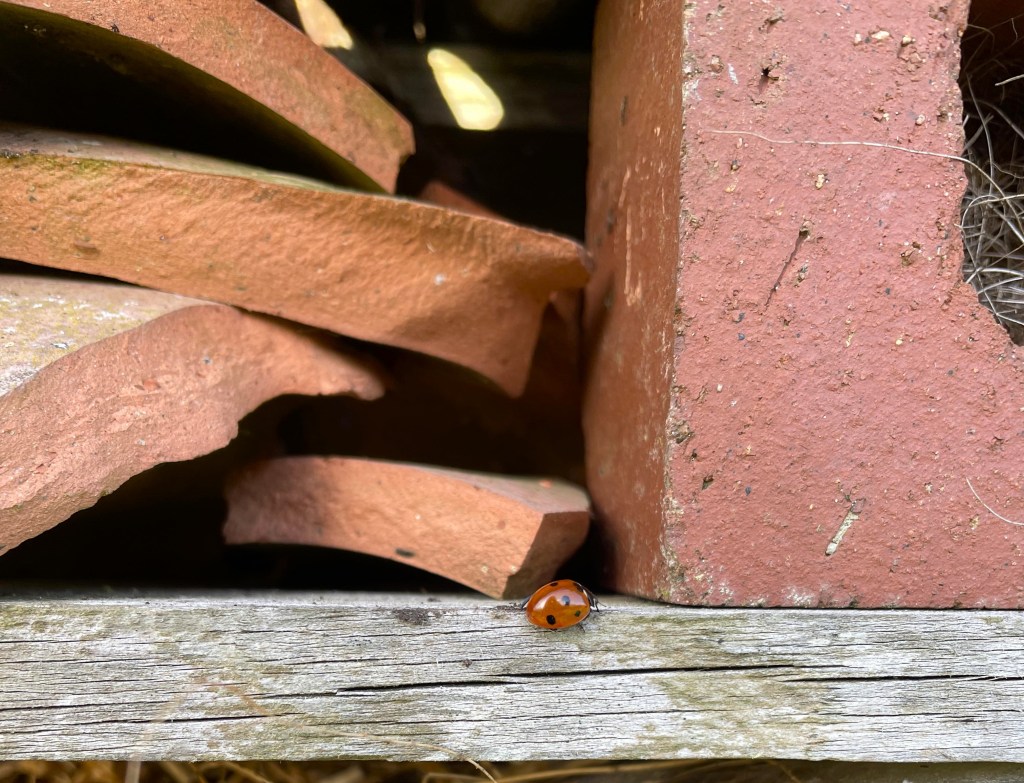
When you’re happy with the height of your multi-storey bug hotel put a roof on to keep it relatively dry (I have yet to put a roof on mine), this can be anything from wood/roofing felt to old roof tiles or slates. You could even try a green roof. Don’t forget to scatter wildflower seed around to provide food for butterflies, bees and other pollinators.
Have fun creating a wildlife haven!


 Allotment Haven
I had mason bees first on the allotment then in the back garden, they did well. A few years ago I had tree honey bees, they settled in my new bird nesting box, amazing to watch. Love your bug hotel!
LikeLike
That’s amazing, oh I could spend hours watching them building their little mud and leaf nests. Did you watch My Garden of a Thousand Bees on TV? So interesting!
LikeLiked by 1 person
I have my first bug hotel under construction at the plot. I’m swiping ideas from yours 🙂
LikeLiked by 1 person
That’s great, swipe away!
LikeLiked by 1 person
That’s such a good idea, although I don’t have one on my small half plot mainly because of a lack of space. However I do have two mini ponds. xx
LikeLike
Ponds are wonderful too, I am waiting for permission from the committee to go ahead with a pond, fingers crossed I get the green light x
LikeLiked by 1 person